We will get back to you within 24 hours. Contact us ×

Limited Space
Multiple levels

When a global drive technology company planned a new production facility in Sweden, space constraints called for a smarter approach. OCS responded by redesigning the internal material flow, using the full building height instead of floor space to increase capacity, improve safety, and reduce energy use within the site’s existing limits.

From challenge to opportunity
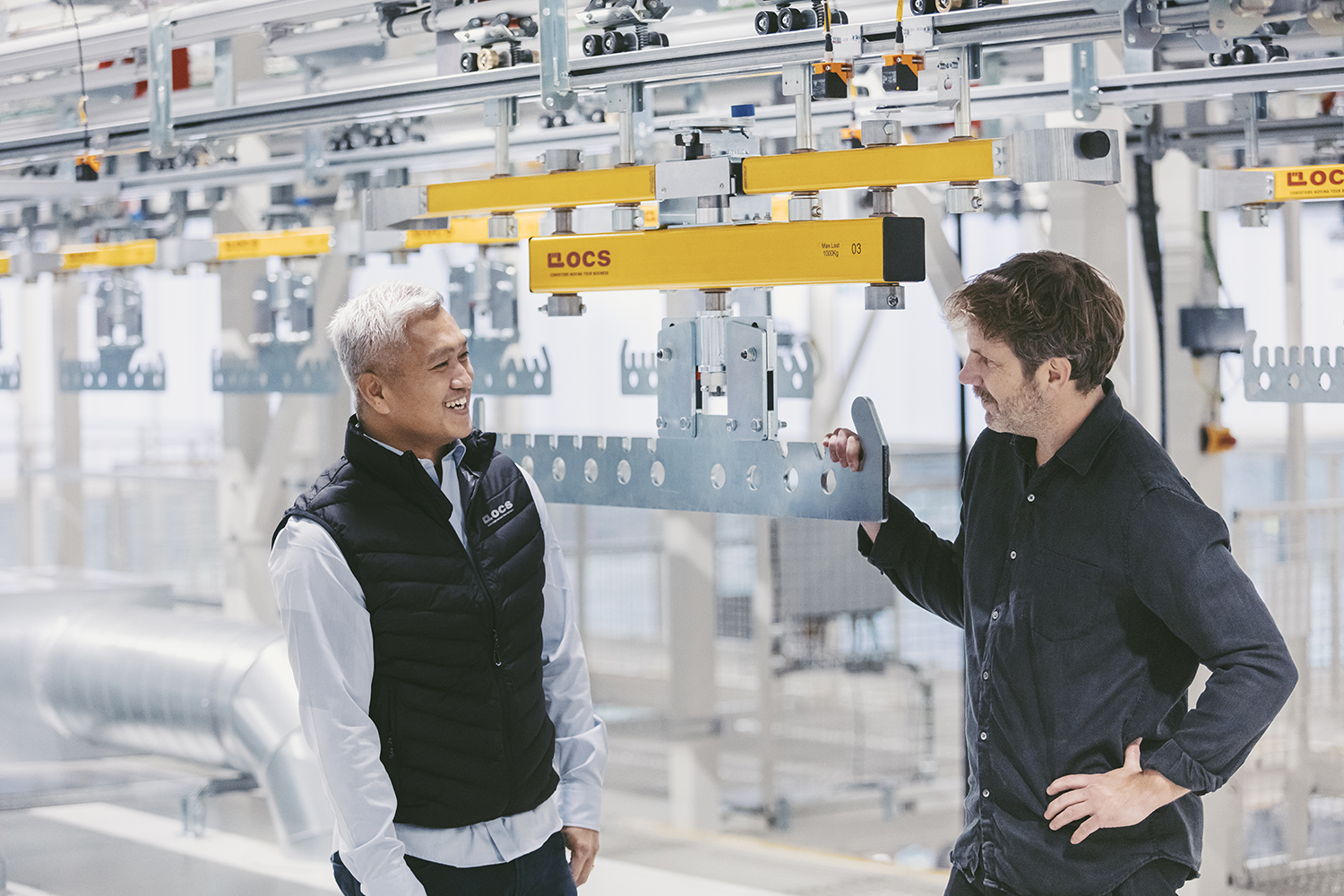
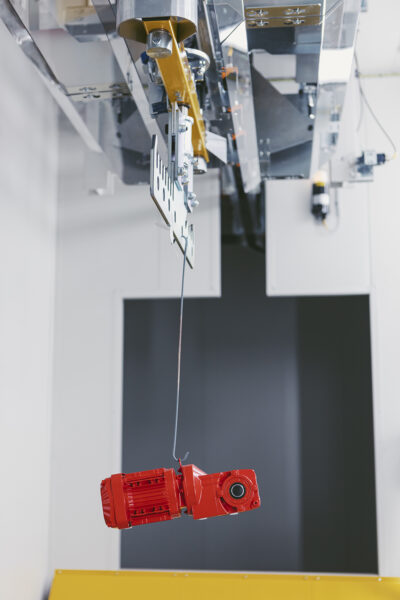
The project began with listening. SEW-Eurodrive, a German-based multinational company, needed a high performing, low-maintenance conveyor system to support its newest gearmotor production line. OCS translated that need into action, and applied its multiplex, friction-based technology to deliver a flexible system capable of handling various heavy loads at speed. The most complex task lay in developing customized lifting units to transport goods between different levels in the factory, units that combined mechanical strength with operator safety. “The result reflects how teamwork and smart design can turn a practical challenge into a solution offering improved performance and energy efficiency,” says OCS Project Manager Krister Söderström.

“It was our first project with SEW, so our way of working closely with the customer proved essential. We brought our conveyor solution know-how; they brought their deep production expertise, and the system integrator company Energy Partner Systems (EPS) coordinated the installation on site. Together we built trust and learned a lot.

Teamwork beyond engineering More than 20 OCS colleagues contributed across design, production, and installation, each adding their own expertise to keep the project on track. Krister describes the project as a year-long dialogue in which technical precision and practical collaboration shaped every step.

“It’s never about one person. We learn from each other and support each other. That’s how good systems are built,” Krister says.

The line runs on two floor levels at speeds of up to 30 meters per minute, handling loads of up to one ton safely and efficiently while minimizing noise and maintenance. Each movement is controlled, every lift balanced, and all risks assessed in advance. The finished system met all production and safety targets on day one. For SEW, the new line supports their sustainability goals. The drive units of each lift recover energy during downward movement, feeding it back into the system and reducing total electricity consumption by 25 percent.

“In a project of this size, teamwork is always crucial. Even though EPS was the main contractor, OCS—and especially Krister’s project leadership—played an increasingly important role in finalizing the system,” Magnus (SEW) concludes

Customer Perspective – SEW on the OCS Solution
For SEW, flexibility and speed are essential to meeting their customer expectations. Thanks to OCS’s fully integrated conveyor solution, connected directly to SEW’s order and control systems, the company now operates in a fully digital flow that secures fast, reliable deliveries. A key reason for choosing OCS was the ability to design a compact, silent, friction-based system that also supports SEW’s own technology showcase.

“OCS managed to meet our demand for a smaller footprint, which was a key factor. Their friction-based technology also gives us a quieter solution. And with this setup, we can use our own drive technology as a showcase for customers in an even better way,” says Magnus Bengtsson, Project Manager at SEW.

Energy efficiency was another priority. Early commissioning tests indicate the system can reuse around 25 percent of the energy consumed, depending on load and lift cycles. Performance is expected to follow a linear curve as operations scale. Strong collaboration throughout the project was also critical. While SEW partnered with EPS as the main contractor, OCS’s project leadership became increasingly central during the final stages.

“In a project of this size, teamwork is always crucial. Even though EPS was the main contractor, OCS—and especially Krister’s project leadership—played an increasingly important role in finalizing the system,” Magnus concludes.

ocs-0272