Building Blocks
Building Blocks for Modern Assembly Lines
Our modular Building Blocks system creates flexible, scalable, and future-proof assembly lines, adapted for both manual and automated production.
The 10 Core Elements of the Assembly Line
Seamlessly integrated, flexibly modular, and easily scalable.
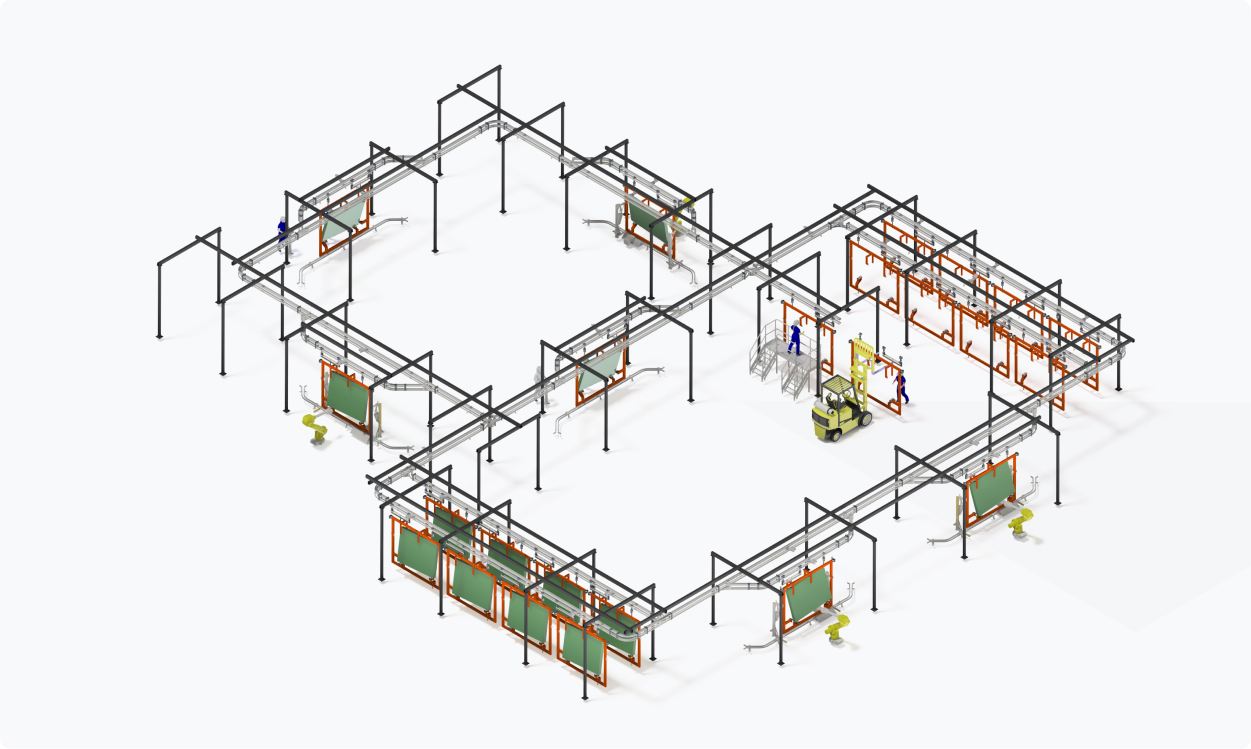
The Foundation for Every Assembly Line
Each station can be configured for either manual or automated operation.

1. Loading Station
Input point for raw materials or components into the process.
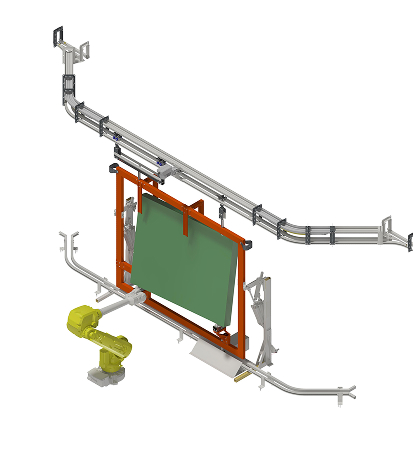
2. Assembly Station
Areas for component assembly and product formation.

3. Full Buffer
Reserves components or products to ensure flow and reduce downtime.
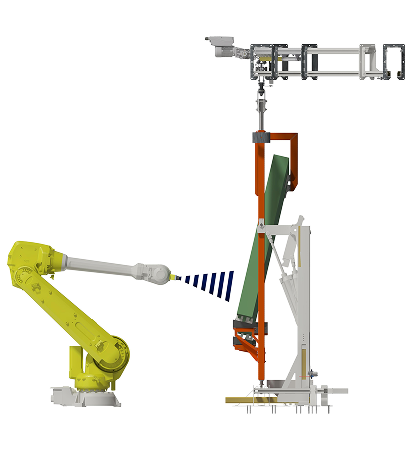
4. Quality Station
Control point for product inspection and quality testing.
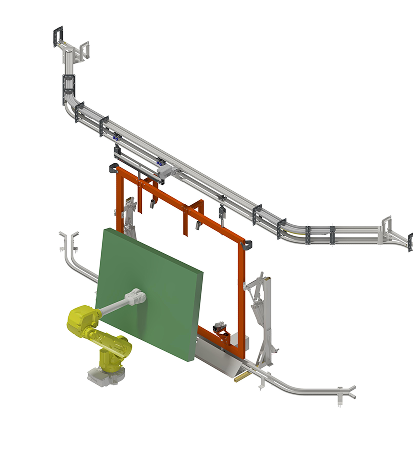
5. Unloading Station
Final stage where products are removed from the line for packaging or further processing.

6. Rework Station
Stations for product adjustments, repairs, or customizations.

7. Service Station
Stations for maintenance and repair of load handling units.
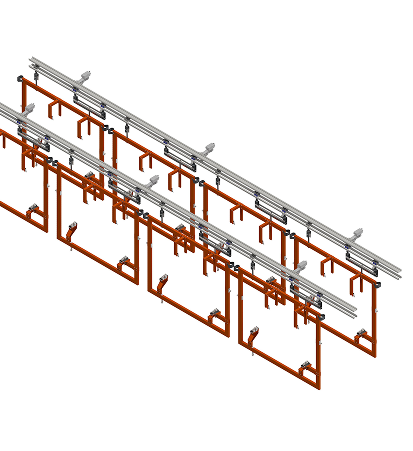
8. Empty Buffer
Temporary storage of carriers awaiting return to the loading station.

9. Support Structure
Steel frame that integrates all building blocks into a cohesive system.
Identification of Key Components
Seamlessly integrated, flexibly modular, and easily scalable.
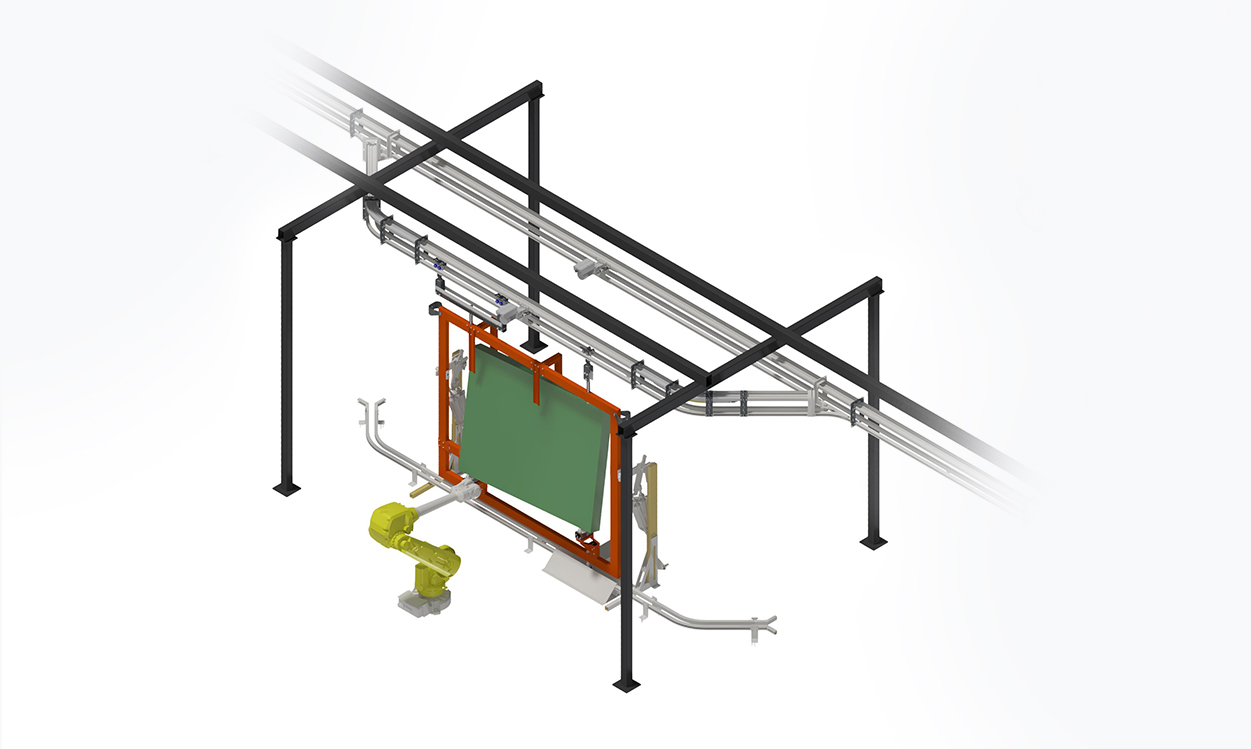
Steel Structure
- Primary steel structure: The main framework that provides fundamental support for the entire conveyor system.
- Secondary steel structure: Supplementary support elements that enhance the stability and durability of the primary structure.
Load-Bearing Elements
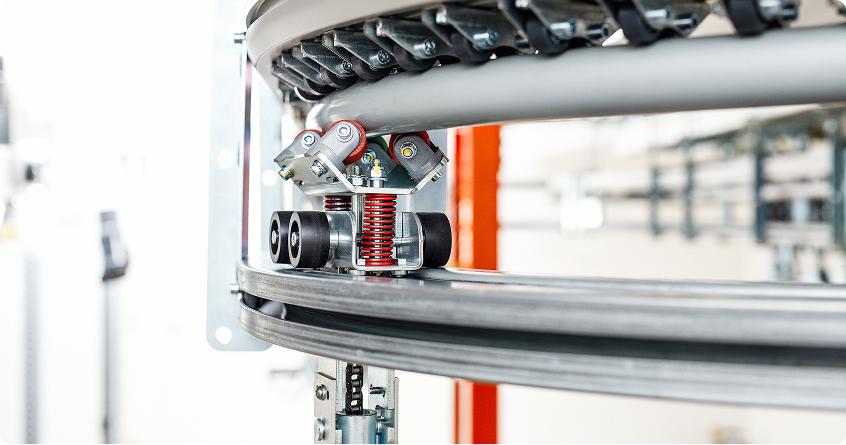
- Trolley: The wheeled mechanism that attaches to the load bar and enables travel along the conveyor track.
- Load bar: The structural component extending between trolleys, designed to bear the weight of the load.
- Carrier: The holder that carries the materials or products.
- Load handling unit: The unit that enables handling of loads, including loading and unloading operations (trolley + load bar + carrier).
Conveyor
- Conveyor track: The path along which the carriers move, designed for smooth and efficient transport.
- Drive unit: The power source that propels the conveyor, ensuring smooth movement and control.
Loads
- Bar load: The total weight carried by the load bar, including the carrier and its contents.
- Secondary steel structure: Supplementary support elements that enhance the stability and durability of the primary structure.
Fixing

Flow
Assembly Methods
- Stop-and-go: Precision assembly at fixed points, ideal for tasks requiring detailed work and quality checks.
- Continuous operation: Assembly in motion, perfect for high-efficiency, high-volume production.
- Hybrid variant: A flexible combination of Stop-and-go and Continuous operation, adaptable to changing production needs.
Flow Management
Assembly Methods
- Strategic buffering: Include buffer positions before each assembly station to ensure smooth transitions and eliminate waiting times for carriers.
- OCS DC Flow Control: Manages flow to parallel stations according to a predefined “recipe” for sequence assembly, optimizing efficiency and consistency.
- Flexible cycle time: Ability to adapt and adjust cycle time and speed at each station as needed, within a specified range.

Crucial Metrics for the Assembly Line
Component Input
- Adaptive production: Managing the flow based on input, including the ratio of different products being assembled.
- Flexibility: Ability to quickly adapt the production line to changes in product mix or production volume to optimize throughput.
Assembly Line Cycle Time
- Definition: The rate at which a finished product leaves the assembly line, often synchronized with customer demand.
- Significance: Cycle time is crucial for balancing workload and ensuring a smooth flow without bottlenecks.
Production Output
- Measurement units: Parts per day, per hour, or per minute – a clear measure of the assembly line’s capacity and efficiency.
- Goal: Maximize output while maintaining quality, ensuring production targets are consistently met.